When an employee resigns, you must act quickly to protect your business, confidential information, and client relationships during the notice period. Even a short window of unrestricted access can put your organization at serious risk.
Garden leave helps you do that by keeping the employee on payroll while restricting them from working until their employment officially ends. In this guide, you'll learn what garden leave is, how it works, its benefits, legal considerations, and HR best practices.
What Is Garden Leave?
Garden leave is a period during which an employee is still officially employed and paid but is asked not to work. During this time, the employee continues to receive their salary and benefits while being restricted from accessing company systems, contacting clients, or joining a competitor until their employment officially ends.
This period of time gives you time to reassign responsibilities, secure company assets, and minimize the risk of disruption before the employee's departure. Throughout this period, the employee remains bound by the terms of their employment contract, including confidentiality and other applicable obligations.
Benefits and Drawbacks of Garden Leave
Before implementing garden leave, it's important to weigh its advantages and potential challenges to determine whether it's the right approach for your business.
| Benefits | Drawbacks |
|---|---|
| Protects confidential information and business data. | You must continue paying the employee during the leave period. |
| Reduces the risk of losing clients to competitors. | It can increase costs, especially for senior employees. |
| Gives you time to transfer work and plan a smooth handover. | Employees may lose engagement while away from work. |
| Prevents access to company systems and sensitive information. | It may not be enforceable without a clear employment contract. |
| Helps maintain business continuity during employee transitions. | Laws vary by country and region, making compliance more challenging. |
| Reduces conflicts of interest when employees join competitors. | Managing payroll and compliance can add to your HR workload. |
How Garden Leave Works
Once you decide to place an employee on garden leave, following a structured process helps you protect your business, ensure legal compliance, and manage a smooth transition.
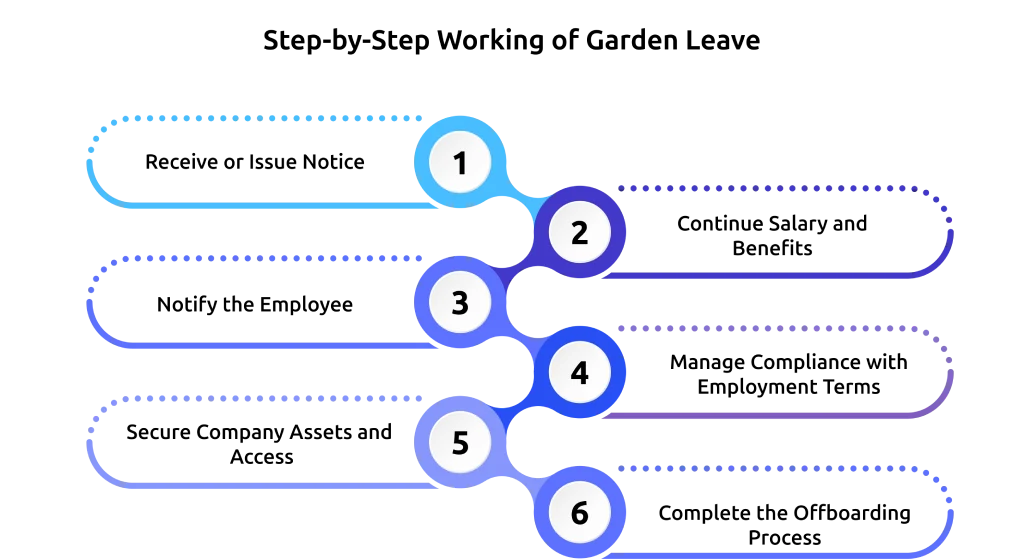
Step 1: Receive or Issue Notice
The process begins when an employee resigns or you decide to terminate their employment. At this stage, you review the employment contract to determine whether a garden leave clause applies. If it does, you can initiate garden leave as part of the employee's notice period while planning the transition.
Step 2: Notify the Employee
Once you've decided to place the employee on garden leave, provide a formal written notice explaining the arrangement. Clearly mention the duration, the employee's responsibilities, employee compensation, and any restrictions, such as not performing work, accessing company systems, or contacting clients. This helps avoid confusion and ensures both parties understand their obligations.
Step 3: Secure Company Assets and Access
After issuing the notice, remove the employee's access to company email, internal systems, cloud applications, and other business resources. Collect company-issued devices, ID cards, and other assets where appropriate. Acting quickly at this stage helps protect confidential data and reduces the risk of unauthorized access and data exfiltration.
Step 4: Continue Salary and Benefits
Throughout the garden leave period, continue paying the employee according to the employment contract. This typically includes basic salary, benefits, and any other contractual entitlements. Although the employee is not actively working, they remain employed until the agreed end date.
Step 5: Manage Compliance with Employment Terms
During garden leave, make sure the employee follows the conditions included in their employment contract. Depending on your agreement, they may be prohibited from moonlighting, contacting clients or colleagues for business purposes, or sharing confidential information. Monitoring compliance helps protect your business interests throughout the notice period.
Step 6: Complete the Offboarding Process
Once the garden leave period ends, finalize the employee's departure. Process final payments, confirm the return of company property, deactivate any remaining accounts, and complete all required HR documentation. If applicable, post-employment obligations such as confidentiality or non-compete clauses continue according to the employment contract.
Garden Leave by Country and Region
Garden leave laws vary significantly by jurisdiction. The regions below show where garden leave is most commonly used, what the legal framework looks like, and how employers typically implement it. If you manage employees across multiple countries, you should design your garden leave policies to comply with the strictest applicable employment laws.
United Kingdom
The UK is the origin and most established market for garden leave. Courts generally enforce reasonable garden leave periods, typically up to 12 months for very senior roles. During this period, employees continue receiving their full salary and benefits, making garden leave a balanced way to protect both employer and employee interests.
United States
Massachusetts became the first U.S. state to formally require a "garden leave" provision in certain noncompete agreements. Under the new law, when an employee leaves a company but is restricted from working for a competitor, the former employer must generally pay at least 50% of the employee's base salary during the noncompete period.
India
Garden leave is a growing practice in India's IT, finance, and consulting sectors, especially for senior employees moving to competitors. If you include garden leave in the employment contract, Indian employment law generally allows you to implement it. Garden leave periods of 3 months are common, with employees continuing to receive their salary and benefits throughout the period.
Legal Considerations Before Using Garden Leave
Before placing an employee on garden leave, you should confirm the arrangement complies with your employment contract and applicable labor laws. Since employment regulations vary by country and region, reviewing the legal requirements beforehand can help you avoid disputes and protect your business interests.
1. The Clause Must Exist in the Contract
You should include a garden leave clause in the employee's employment contract before relying on it. Without a contractual provision or mutual agreement, requiring an employee to remain away from work during the notice period may not be legally enforceable. Learn more about HR compliance challenges and how to avoid them.
2. The Length Must Be Reasonable
The duration of garden leave should be reasonable and appropriate to the employee's role and the level of business risk. A garden leave period that is too long may be challenged if it unfairly restricts the employee from pursuing new job opportunities.
3. Full Compensation Is Mandatory
If you place an employee on garden leave, you should continue paying their salary and provide any contractual benefits throughout the leave period. Since the employee remains employed, you are generally expected to honor the terms of the employment agreement until it officially ends.
4. Restrictions Must Be Clearly Defined
Clearly outline any restrictions that apply during the garden leave period. These may include limitations on accessing company systems, contacting clients, sharing confidential information, or working for another employer. Well-defined terms help avoid misunderstandings and make disciplinary action easier to enforce if violations occur.
Garden Leave vs Notice Period vs PILON vs Severance
Although these terms are often used in a similar way, they serve different purposes during an employee's departure. Understanding the differences helps you choose the right approach based on your business needs, legal obligations, and the level of risk involved.
| Aspect | Garden Leave | Notice Period | PILON (Payment in Lieu of Notice) | Severance Pay |
|---|---|---|---|---|
| Employment Status | Employee remains employed | Employee remains employed | Employment ends immediately | Employment has already ended |
| Employee Works? | No | Yes | No | No |
| Salary & Benefits | Receives full salary and benefits throughout the leave period | Receives regular salary and benefits while working | Receives a lump-sum payment instead of working the notice period | Receives a one-time payment after employment ends (if eligible) |
| Access to Company Systems | Usually revoked immediately | Typically retained unless restricted | Revoked immediately | Revoked after employment ends |
| Main Purpose | Protect confidential information, client relationships, and business interests | Allow the employee to complete work and hand over responsibilities | End employment immediately while meeting notice pay obligations | Provide financial support after termination or layoff |
| Typical Duration | Matches the contractual notice period | Defined in the employment contract | No notice period is worked | Depends on company policy, contract, or local labor laws |
| Best Suited For | Senior executives, key employees, or employees with access to sensitive information | Most resignations and standard terminations | Immediate exits due to business or operational needs | Employees eligible for severance under company policy, employment contracts, or applicable labor laws. |
| Can an employee join another employer? | Usually, no, until the garden leave period ends | Generally, no, unless approved by the employer | Yes, after employment officially ends (subject to any post-employment restrictions) | Yes, after employment officially ends (subject to any post-employment restrictions) |
Are You Ready to Take Control of Employee Offboarding?
Protect your confidential data, prevent unauthorized access, and keep every employee exit secure with Time Champ!

Decisions Backed by Data
Trends and team-level analytics that show what matters.
Explore Workforce Analytics →